
Why people ask about accessible bathrooms
Aging in place is one reason. A lot of Portland-area homes have bathrooms that were built decades ago with a standard tub-shower combo and not much else. As people get older, or as family situations change, those bathrooms start to feel like obstacles.
The CDC reports that more than one in four adults 65 and older fall each year (CDC). The CDC's home safety guidance specifically mentions adding grab bars inside and outside the tub or shower and next to the toilet, and adding more or brighter light bulbs as practical steps (CDC). A bathroom remodel is a natural time to address these things.
Changes people commonly ask about
There is no single formula for an accessible bathroom. The right changes depend on the person who will be using the space. Some of the most common requests include:
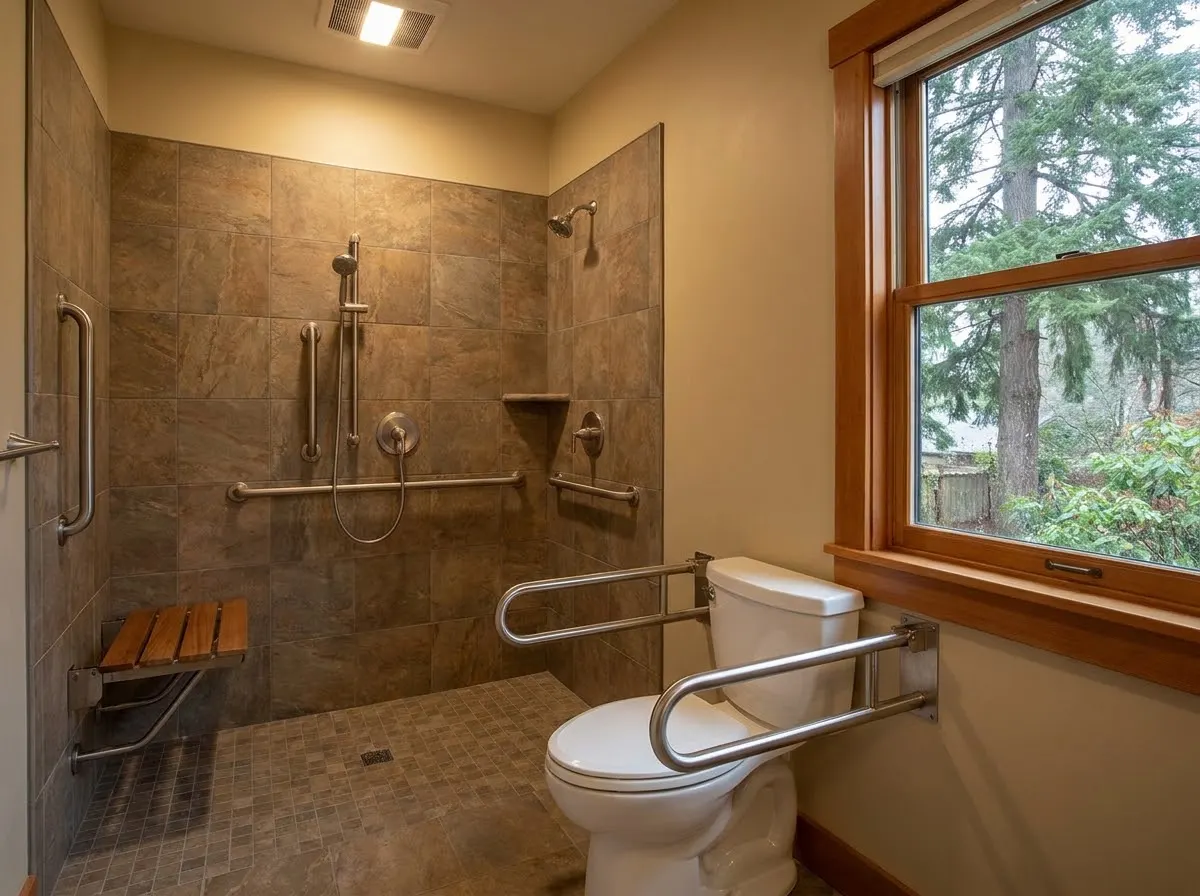
- Walk-in or curbless showers that eliminate the step over a threshold
- Grab bars at the toilet, shower entry, and inside the shower
- A handheld showerhead on a slide bar for flexible positioning
- A built-in or fold-down shower bench
- A comfort-height toilet that is easier to sit down on and stand up from
- Wider doorways to allow a wheelchair or walker to pass through
- Slip-resistant flooring
- Better lighting throughout the bathroom
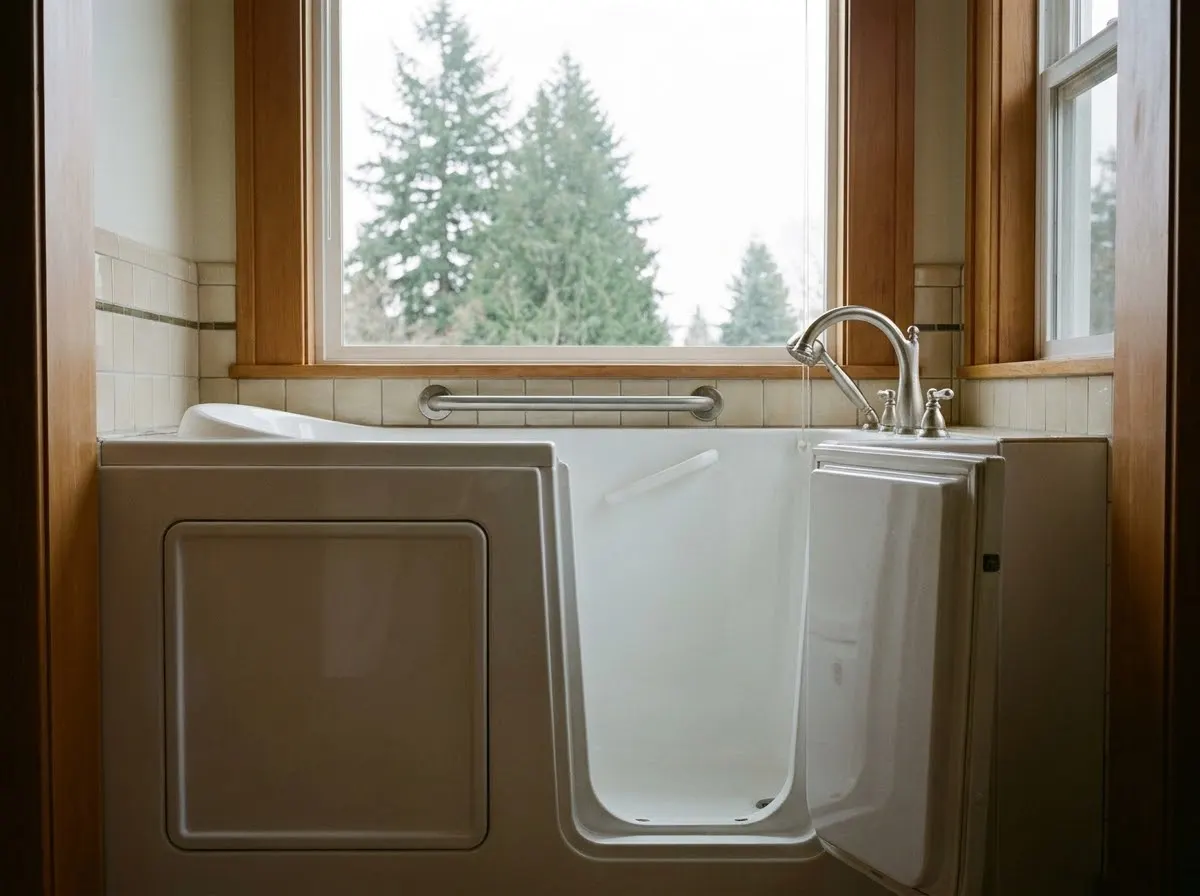
A walk-in tub is another option some homeowners ask about, particularly for those who prefer soaking baths. Ask your contractor about the differences between a walk-in tub and a curbless shower and which makes more sense for your household.
How do I make our bathroom safer to use?
Getting in and out of the tub has become harder, and every day it stays the same feels like one more day of unnecessary risk.
A local contractor can walk through the bathroom with you, talk through the options, and give you a quote.
Talk to a Local ContractorCompletely risk free & no obligation.
Plan it with the person who will use it
This sounds obvious, but it gets skipped more often than you might expect. The person who will use the bathroom every day should be part of every conversation: which side they prefer grab bars on, how high a bench needs to be, whether a handheld showerhead is more useful than a fixed one.
A contractor experienced in aging in place work will ask these questions. If yours does not, bring them up yourself.
Permits for accessible bathroom work in Portland, OR
Portland Permitting and Development notes that a bathroom remodel may need trade permits for electrical, mechanical, and plumbing work (Portland Permitting and Development). Some projects qualify for the city's faster Simple Bathroom Program, and construction can start only after the permit is issued (Portland Permitting and Development). Ask your contractor whether your project needs a permit before any work begins.
How to choose a contractor for accessible bathroom remodeling
Oregon requires contractors to be licensed by the CCB for most construction work (CCB). A licensed contractor must carry insurance to cover property damage or injuries, and must hold a bond that can pay a customer who suffers damage from poor workmanship (CCB). Oregon law requires a written contract for projects over $2,000, and unlicensed contractors cannot pull required building permits (CCB).
You can look up any contractor on the CCB website at oregon.gov/ccb or call 503-378-4621. The record shows whether the license is active, along with endorsements, bond, insurance, and complaint history. The CCB suggests checking again on the day work starts (CCB).
A few things worth doing before you hire:
- Ask for references and follow up. Did the project finish close to schedule? Did the final price come in near the bid? Did the contractor use a written contract and written change orders? (CCB)
- Be cautious if a contractor asks for an unusually large deposit upfront. A reasonable down payment covers permits and materials, but a very large one is a warning sign (CCB).
If something goes wrong, the CCB has mediators who help resolve disputes between customers and licensed contractors (CCB). You can also explore related pages like walk-in shower installation and bathroom remodeling for more detail on specific parts of the project.
Frequently asked questions
What is the difference between a walk-in shower and a walk-in tub?
A curbless or walk-in shower has no threshold to step over, which makes entry easier for people with limited mobility. A walk-in tub has a door in the side of the tub so you can step in without climbing over the edge, and it fills after you are seated. Both serve different needs. Ask your contractor which makes more sense given how the person using the bathroom moves and what they prefer.
Do I need a permit for accessible bathroom changes in Portland?
It depends on the work involved. Portland Permitting and Development says a bathroom remodel may need trade permits for plumbing, electrical, and mechanical work (Portland Permitting and Development). Ask your contractor what permits your specific project requires before work starts.
How do I know if a contractor has experience with aging-in-place work?
Ask directly. Request references from similar projects and follow up with those homeowners. Ask whether they are familiar with grab bar placement, curbless shower construction, and doorway widening. A written contract and written change orders are also signs of a contractor who works professionally (CCB).
Connect with a local accessible bathroom contractor
Call now or fill out the form to get connected with a local contractor who can assess your bathroom and walk you through your options.