
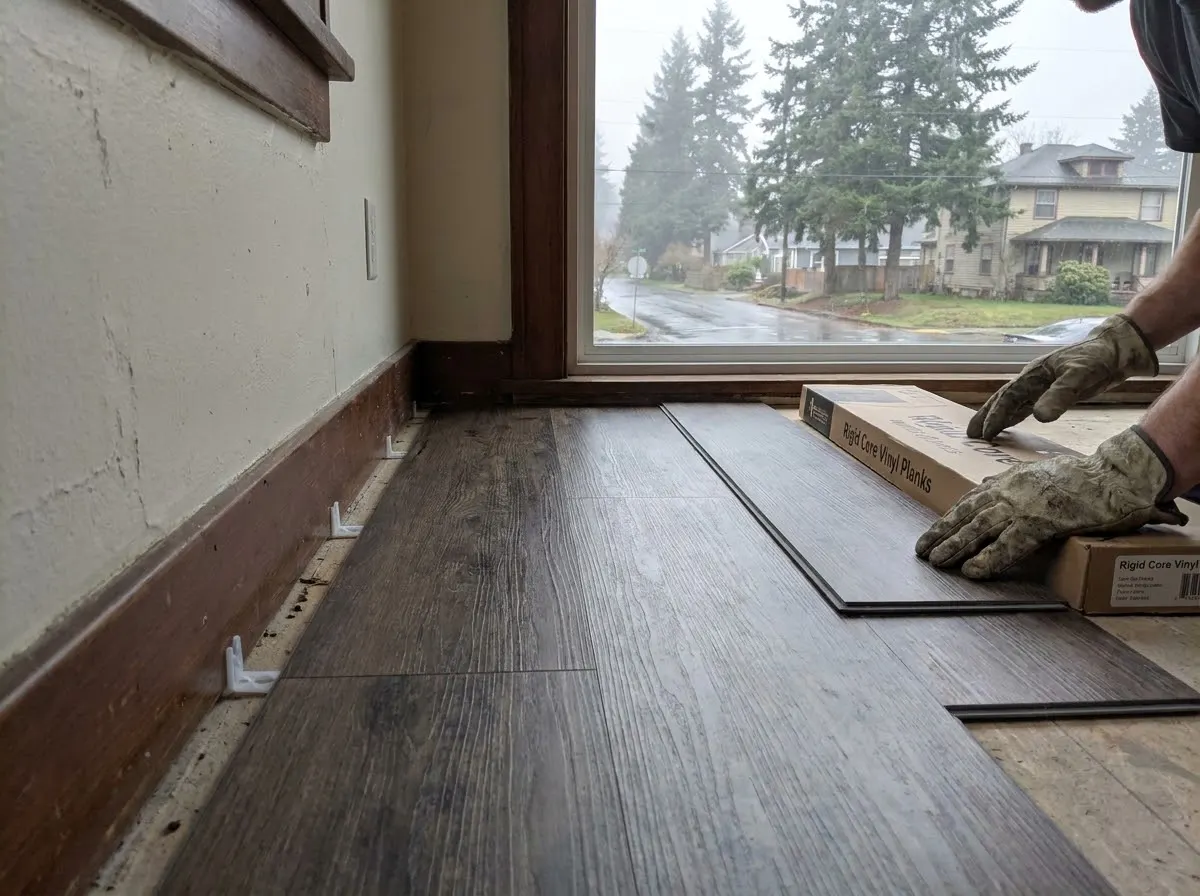
The main flooring options in plain terms
There is no single right answer for flooring. The material that works well in one room may be a poor fit in another.
Hardwood is a classic choice for living areas, dining rooms, and bedrooms. It can be sanded and refinished multiple times over the years, which makes it a long-term option worth asking about if you already have it under old carpet or vinyl. Ask your flooring contractor whether hardwood floor refinishing makes more sense than replacement for your existing floors.
Luxury vinyl plank has become popular in kitchens and bathrooms because it handles moisture better than solid wood. It comes in a wide range of looks and tends to be more forgiving underfoot than tile.
Tile is a common choice for bathrooms and kitchen floors. It holds up well in wet areas, though grout lines need occasional maintenance.
Laminate works in living areas and bedrooms. It generally does not hold up as well in rooms with standing water or heavy moisture, so most flooring contractors will steer you away from it in bathrooms and near sinks.
What flooring installation actually involves
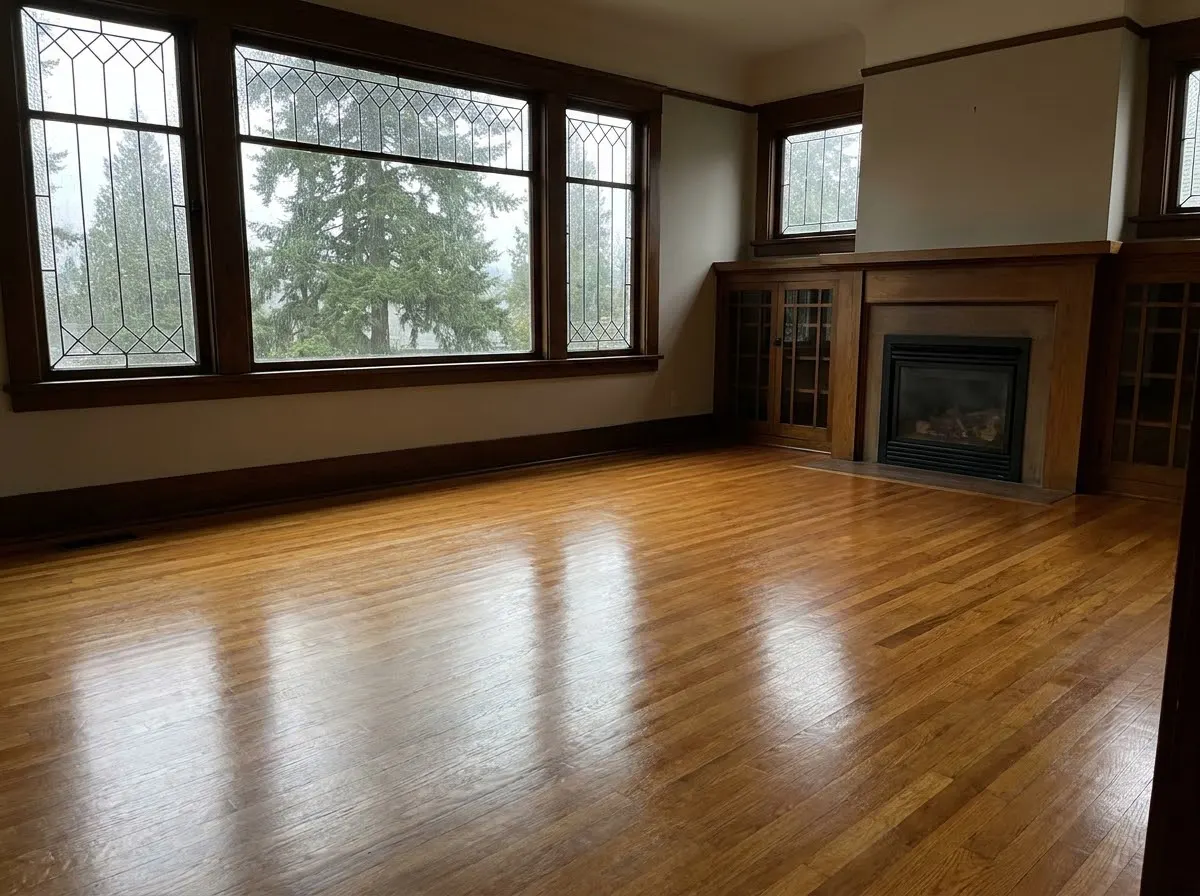
Installing new floors is rarely just laying material on top of what's there. The process usually starts with removing the old flooring, which can take time depending on what's underneath and how it was installed.
Subfloor prep matters a lot. If the subfloor has soft spots, uneven areas, or old adhesive, a good flooring contractor will address those before anything new goes down. Skipping that step tends to cause problems later.
If you are sanding or removing old painted surfaces in a home built before 1978, that work can disturb lead-based paint. Your contractor will need a lead-based paint renovation license from the Oregon Construction Contractors Board (CCB). It is worth asking about this before work starts.
My floors are worn out. Now what?
Every room feels a little tired when the floors are scratched or dated, and it's hard to know which material actually makes sense for your home.
A local contractor can look at your floors, talk through your options, and give you a quote.
Talk to a Local ContractorCompletely risk free & no obligation.
What affects the cost of flooring installation
Flooring quotes vary based on a number of factors:
- The type of material you choose
- The size of the area being covered
- How much old flooring needs to be removed
- The condition of the subfloor and whether it needs repair
- Whether the layout involves stairs, transitions between rooms, or unusual cuts
- Whether hardwood floor refinishing is an option instead of full replacement
Get written bids from any flooring contractor you are considering, and ask that any changes during the project be put in writing as well (CCB).
Do flooring projects need a permit?
If your project involves moving plumbing, adding electrical outlets, or other trade work alongside the flooring, those portions may require trade permits. Ask your contractor whether your specific project needs a permit.
How to choose a flooring contractor in Portland, OR
Oregon requires contractors to be licensed by the CCB for most construction work (CCB). A licensed contractor must carry insurance to cover property damage or injuries, and must hold a bond that can pay a customer who suffers damage from poor workmanship (CCB). Oregon law requires a written contract for projects over $2,000, and unlicensed contractors cannot pull required building permits (CCB).
You can look up any luxury vinyl plank installer or other flooring contractor on the CCB website at oregon.gov/ccb or call 503-378-4621. The record shows whether the license is active, along with endorsements, bond, insurance, and complaint history. The CCB suggests checking again on the day work starts (CCB).
Before you hire:
- Ask for references and follow up on them. Did the job finish close to schedule? Did the final price come in near the bid? Did the contractor use a written contract and written change orders? (CCB)
- Be cautious if a contractor asks for an unusually large down payment. A reasonable deposit covers materials and permits, but a very large one upfront is a warning sign (CCB).
If a dispute comes up, the CCB has mediators who help resolve issues between customers and licensed contractors (CCB). You can also explore related projects like kitchen remodeling or bathroom remodeling if your flooring project is part of a larger renovation.
Frequently asked questions
Can I put new flooring over my existing floors?
Sometimes, but not always. It depends on the height of existing thresholds, the condition of what's underneath, and the material being installed. A flooring contractor can assess whether your subfloor is suitable or whether the old material needs to come up first.
Is hardwood floor refinishing worth it instead of replacing?
If you have solid hardwood floors in decent condition, refinishing is often a more cost-effective option than full replacement. Ask your contractor to look at the floor and give you an honest assessment of whether refinishing makes sense.
What if my home was built before 1978?
Sanding or removing old painted surfaces can disturb lead-based paint. If your home was built before 1978, your contractor will need a lead-based paint renovation license from the CCB. Confirm this before hiring.
Get connected with a local flooring contractor
Call now or fill out the form to get connected with a local contractor who can assess your floors and give you a straightforward quote.